What is identity governance and administration (IGA)?
Identity governance and administration (IGA) is the set of policies, processes, and tools that manage digital identities and their entitlements from request through approval, use, attestation, and removal.
Think of IAM as the turnstile: it verifies who you are and opens the door. IGA is the building access policy: which floors you may visit, who signed your badge request, and whether your badge still makes sense six months later.
Core IGA functions include:
- Identity lifecycle management: Provisioning and deprovisioning tied to HR and contractor events (see the lifecycle guide).
- Access certification: periodic manager and owner attestation that entitlements remain valid.
- Policy and role management: Role-based access control (RBAC) models, birthright access, and exception handling.
- Segregation of duties (SoD): Rules that prevent toxic combinations (for example, create vendor and approve payment in the same ERP profile).
- Audit and reporting: Evidence supporting SOX, HIPAA, GDPR, and internal access-control reviews.
Gartner's Identity Governance and Administration market definition describes IGA tools as aggregating and correlating identity and access rights data so security teams can enforce policy and prove compliance. That aggregation problem is central to IGA: entitlements live across dozens of systems, but governance requires a single view.
Decision rule: If the question is "Can this person log in?" that is IAM. If the question is "Should this person still have this entitlement?" that is IGA.
Why IGA matters now
Three pressures make identity governance a business and security priority, not simply an IAM side project.
SaaS sprawl complicates governance: Large organizations may use hundreds of SaaS applications. Each application can create local roles, OAuth grants, and group memberships that are not visible in the primary IAM directory. Without centralized governance, nobody may be checking whether a Salesforce administrator from 2022 still needs export rights.
Compliance expects provable access control: SOX internal controls, HIPAA's minimum-necessary standard, and GDPR accountability create expectations around who has access, when it was granted, and who approved it. Spreadsheet-based attestation becomes difficult to defend when an auditor requests entitlement history across cloud and on-premises systems.
Machine and agent identities complicate ownership: Service accounts, integration bots, and AI agents may receive entitlements without a clear manager or HR event. IGA programs focused only on employees can leave these identities outside consistent ownership, attestation, and lifecycle policies.
| Pressure | Without IGA | With IGA |
|---|---|---|
| SaaS growth | Shadow entitlements, unknown app owners | Central entitlement inventory + certification |
| Audit | Point-in-time screenshots | Policy records + attestation evidence |
| Workforce change | Orphaned contractor access | Deprovisioning workflows + recertification |
| SoD risk | Toxic role combos discovered late | Preventative policy at grant time |
Decision rule: If your last access review was a CSV emailed to managers, you have an attestation problem IGA can address. If misconfigurations develop between reviews, add ISPM for continuous posture monitoring alongside periodic IGA attestation.
How IGA works
IGA runs as a closed loop: request, approve, provision, use, attest, remediate, and deprovision.
- 1.Policy definition. Security and application owners define roles, birthright access, SoD rules, and approval chains. Policy lives in the IGA platform, not in tribal knowledge.
- 2.Access request and approval. Users or managers request entitlements through a catalog or workflow. Approvers see risk context (role sensitivity, SoD conflicts, peer access patterns) before granting.
- 3.Provisioning and fulfillment. Approved requests push to target systems via connectors, SCIM, or custom integrations. IAM may execute the technical grant; IGA owns the workflow and record.
- 4.Access use and monitoring. IGA correlates what was approved with what exists in downstream apps. Discrepancies (orphaned entitlements, policy violations) feed remediation queues.
- 5.Certification campaigns. On a schedule, managers and application owners attest that listed entitlements remain appropriate. High-risk roles may use micro-certification (shorter cycles, smaller scope). Campaign design detail lives in the access certification guide.
- 6.Remediation and deprovisioning. Failed attestation, HR termination events, or SoD violations trigger revocation. Deprovision hooks must match provision automation; manual teardown is where governance programs die.
Decision rule: Automate deprovisioning before expanding certification scope. Attesting access you cannot revoke creates audit theater.
Key IGA capabilities
IGA platforms bundle capabilities that overlap in marketing slides but serve distinct jobs in operations.
Access reviews and certification
Access certification is periodic attestation that existing entitlements remain valid. Access reviews are the operational process: scoping campaigns, routing tasks to managers, tracking completion, and remediating rejections.
IGA tools can prioritize high-risk entitlements, such as administrator roles, financial systems, and privileged SaaS access, rather than treating every entitlement equally.
Identity lifecycle
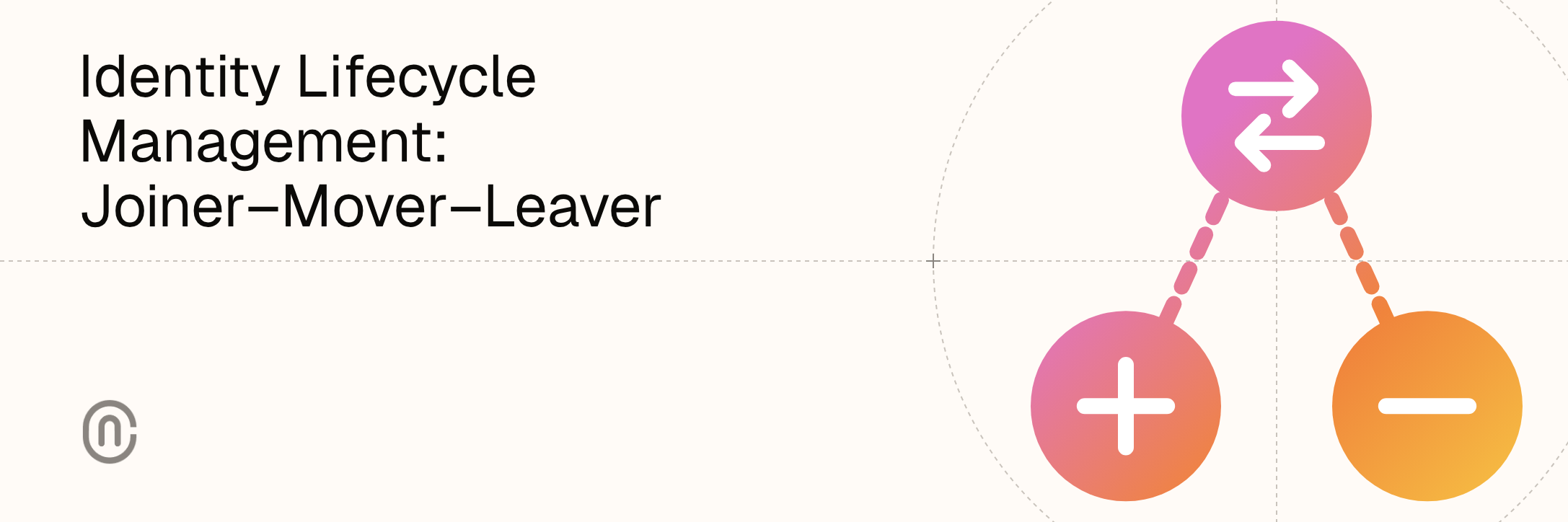
Lifecycle management connects HR events (hire, transfer, leave) to access changes. Joiner workflows grant birthright roles. Mover workflows adjust department-scoped access. Leaver workflows revoke connected entitlements and disable accounts.
See the joiner-mover-leaver guide for a closer look at lifecycle workflows.
Policy and role management
Policy engines encode who may request what, under which conditions. RBAC models group entitlements into roles; attribute-based rules handle exceptions. Effective IGA policy can reduce request volume by making standard roles easy to assign and exceptions visible.
Segregation of duties
SoD rules block or flag conflicting entitlements before grant. Examples: accounts payable + accounts receivable in ERP, or code deploy + production database admin in a single profile.
SoD is preventive governance. It complements detective controls in SIEM and ISPM posture scoring.
| Capability | Primary question | Typical owner |
|---|---|---|
| Access certification | Should this access still exist? | Manager + app owner |
| Lifecycle | What changes when HR status changes? | IAM team + HR |
| Policy / RBAC | What may be requested by default? | Security architecture |
| SoD | Which combinations are forbidden? | GRC + app owner |
Decision rule: Start certification with administrator and financial entitlements. Expand to the broader population only after remediation processes and SLAs have been tested.
IGA vs IAM vs PAM
Legacy categories still matter. None replaces the others.
| Approach | Built for | IGA relationship |
|---|---|---|
| IAM | Authentication, SSO, MFA, basic provisioning | IAM executes login and often initial grants; IGA governs entitlements over time |
| IGA | Entitlement policy, attestation, lifecycle, SoD | Governance across IAM and application entitlements |
| PAM | Privileged session vaulting, JIT checkout, session recording | PAM protects how admins use privilege; IGA governs who holds standing privileged roles |
IAM answers authentication. Strong MFA reduces the risk that stolen credentials lead to account compromise; it does not prove a contractor still needs SAP access after a project ends.
PAM answers privileged session control. Vaulting a break-glass account helps; IGA can govern who holds privileged roles and whether those assignments remain valid through certification.
IGA answers entitlement policy and proof. It integrates with IAM, application connectors, and PAM to provision access and govern privileged role membership.
Decision rule: Keep IAM for the front door. Keep PAM for vaulting and session control. Add IGA when entitlement tables sprawl beyond what IdP-native reviews can cover. Add ISPM when misconfigurations drift between certification cycles.
For vendor selection, see Best IGA Software & Solutions [2026]. For a definitional entry point, see What is Identity Governance? IGA Explained.
IGA best practices
- 1.Inventory entitlements before policy. You cannot certify what you have not discovered. Map applications, roles, and owners across cloud, SaaS, and on-prem.
- 2.Tie lifecycle to authoritative identity sources. Joiner-mover-leaver automation should be the default path for employees, contractors, and partners; manual provisioning should require approval.
- 3.Risk-rank certification campaigns. Set review frequency according to entitlement risk, regulatory requirements, and the consequences of inappropriate access.
- 4.Enforce SoD at request time. Blocking toxic combinations at grant is cheaper than forensic cleanup after fraud or audit finding.
- 5.Close the remediation loop. Set SLAs for revoking access rejected during certification and remediating orphaned accounts.
- 6.Extend governance to machine identities. Service accounts and integration principals need owners and certification paths, not just human employees. See NHI security and agentic identity as autonomy expands the scope.
- 7.Pair periodic IGA with continuous posture. Certification helps identify standing entitlement debt; ISPM helps identify misconfiguration drift between cycles.
How many applications in your estate have a named owner, a defined recertification schedule, and automated deprovisioning when someone leaves?
Where NewCore fits in the identity governance stack
Identity governance software helps answer who has access, why they have it, and whether they should keep it. But most governance programs still begin with an employee record and the familiar joiner-mover-leaver lifecycle.
Service accounts, integrations, automations, and AI agents do not fit neatly into that model. They may be created without an HR event, operate across multiple systems, and retain access long after the task or workload that required it has ended.
NewCore's Identity Explorer extends visibility across this broader identity environment. It continuously discovers and maps identities, accounts, entitlements, applications, and access paths across directories, infrastructure, PAM, and AI systems, including identities and relationships that may not appear in a traditional governance console.
For AI agents, lifecycle governance treats each agent as a first-class identity with its own record, policies, and audit trail. Teams can attest, observe, and revoke access, while task-scoped tokens limit permissions to the work being performed rather than allowing permanent access to accumulate.
An existing IGA platform can continue to manage workforce access requests, certification campaigns, provisioning, and SoD controls. NewCore broadens the governance model to include the machines and agents operating outside employee-driven processes.
The result is an identity governance model built around the workforce that actually exists: humans, machines, and agents, all visible and governable within the same identity environment.
FAQ
What is identity governance and administration?
Identity governance and administration (IGA) is the discipline of managing digital identities and entitlements through policy, approval workflows, access certification, lifecycle automation, and segregation of duties enforcement.
What is IGA vs IAM?
IAM handles authentication and access delivery (SSO, MFA, session management). IGA handles entitlement policy, attestation, and proof that access remains appropriate over time. They are complementary.
What is identity governance?
Identity governance is the policy and oversight layer that defines who may receive access, who approves it, and how organizations prove compliance. IGA is the operational program and tooling that executes identity governance.
Why do access reviews fail without IGA tooling?
Manual reviews can lack a complete entitlement inventory, remediation tracking, and SoD context. IGA platforms can scope campaigns to high-risk access, route tasks to the appropriate owners, and initiate or track remediation when access is rejected.
Does IGA replace PAM?
No. PAM vaults and monitors privileged sessions. IGA governs who holds privileged entitlements and whether those assignments remain valid through certification and lifecycle policy.
How does IGA relate to ISPM?
IGA focuses on periodic attestation and entitlement policy. ISPM focuses on continuous discovery of identity misconfigurations and posture drift. The two can be used together to address different parts of identity risk.
Discover every agent acting in your business.
Book a DemoTagged
- IGA
- Identity Governance
- Segregation of Duties

Identity Security, NewCore
The team behind NewCore's Identity 101 guides, covering agent security, identity security, workforce security, identity governance, and identity discovery. These guides draw on NewCore's own product and security work, translated into practical, vendor-neutral guidance for security and IT teams managing identity across people, software, and AI agents.
View all articles