Navigate the evolving landscape of identity security with guides covering identity threats, zero trust, and identity threat detection and response (ITDR). Discover frameworks and solutions for protecting human, machine, and AI identities.
Category: Identity Security
Showing 1–5 of 5
 Identity Security
Identity Attack Surface Management: A Guide to Reducing Identity Risk
The NewCore Team · October 2026 Identity Security
Identity Security Platform Comparison: Features and Capabilities
The NewCore Team · October 2026 Identity Security
ITDR Solutions: Choosing an Identity Security Platform
The NewCore Team · October 2026 Identity Security
Zero Trust Identity: A Guide to Securing Access and Identity Risk
The NewCore Team · October 2026 Identity Security
Non-Human Identity Security: Reducing Risk Across Enterprise Systems
The NewCore Team · September 2026
FAQs
Common questions about identity and application security
Identity security is the foundational approach focused on protecting all digital identities, human, non-human, and AI, along with the access they hold. It brings together discovery, governance, authentication, privilege management, and threat detection, recognizing that identity has become the primary way attackers gain entry to organizations.
As organizations moved to cloud and SaaS, the network perimeter faded and identity became the gateway to data and systems. Attackers increasingly log in rather than break in, using stolen credentials, session tokens, and over-privileged accounts to move through environments. The rise of AI agents adds a new class of identities that security teams must now discover, govern, and protect.
ITDR focuses on detecting and stopping attacks that target identity infrastructure and credentials. It monitors for signals like unusual logins, privilege escalation, token theft, and suspicious changes to identity systems, then supports rapid response such as revoking sessions or disabling compromised accounts.
Zero trust assumes no user, device, or agent is trusted by default, so every access request must be verified based on identity, context, and risk. Identity is the core control point in a zero trust architecture, making strong identity security a prerequisite for adopting it.
Use a unified approach: one inventory of all identities, consistent least-privilege policies, accountable ownership, and monitoring that spans every identity type. Treating AI agents as first-class identities alongside people, rather than as an afterthought, closes gaps that fragmented tools leave behind.
From other categories
Browse all of Identity 101 Agent Security
Agentic IAM: The Next Evolution of Identity and Access Management
The NewCore Team · September 2026 Identity Governance
Non-Human Identities Explained: Types, Examples, and Risks
The NewCore Team · September 2026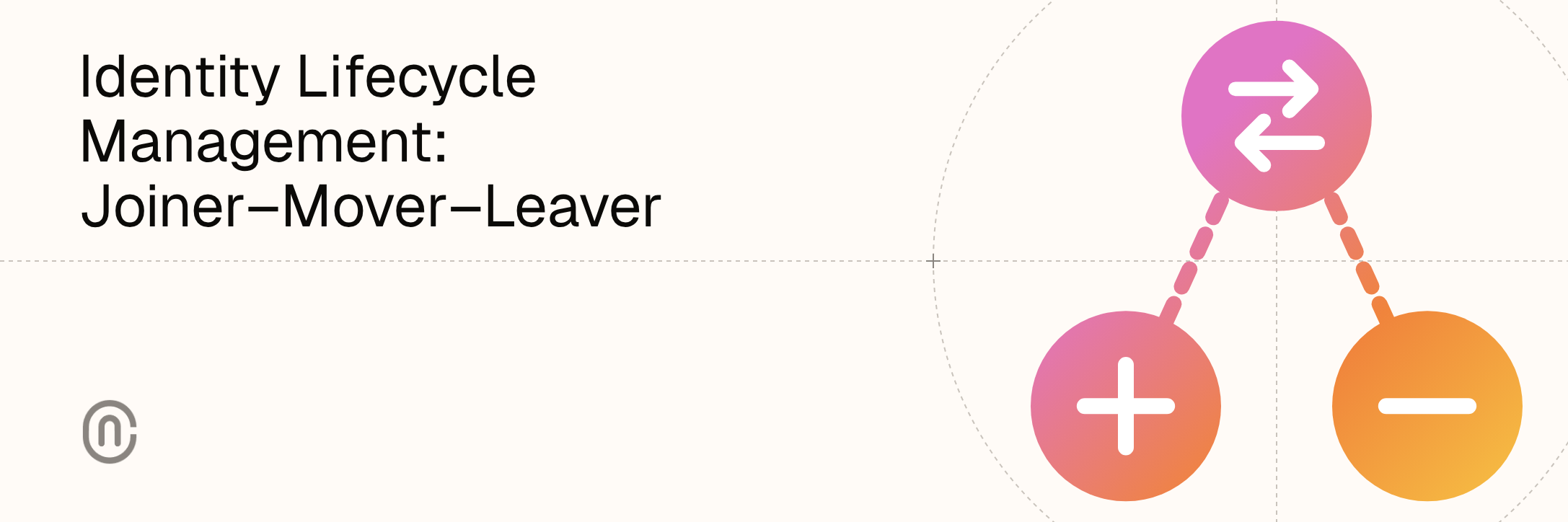 Identity and Access Management
Identity Lifecycle Management: Joiner–Mover–Leaver
The NewCore Team · September 2026