Navigate identity governance and administration (IGA) with guides covering access reviews, identity lifecycles, compliance, and least privilege. Compare governance solutions and learn how to manage human and non-human identities at scale.
Category: Identity Governance
Showing 1–9 of 9
 Identity Governance
Non-Human Identities Explained: Types, Examples, and Risks
The NewCore Team · September 2026 Identity Governance
Non-Human Identity Management: A Guide to Governance at Scale
The NewCore Team · September 2026 Identity Governance
2026 Identity Governance Trends: 7 Predictions for the Future
The NewCore Team · September 2026 Identity Governance
Top 8 Modern IGA Tools in 2026: A Buyer's Guide
The NewCore Team · September 2026 Identity Governance
What is access certification? Access reviews explained
The NewCore Team · September 2026 Identity Governance
Identity Governance & Administration (IGA): The Complete Guide
The NewCore Team · September 2026 Identity Governance
What is Identity Governance? IGA Explained
The NewCore Team · September 2026 Identity Governance
Best IGA Software & Solutions [2026]
The NewCore Team · August 2026 Identity Governance
Machine Identities: Security, Governance, & Management
The NewCore Team · August 2026
FAQs
Common questions about identity and application security
IGA is the set of processes and tools for managing who has access to what, and proving that access is appropriate. It includes provisioning and deprovisioning, access requests, access reviews, policy enforcement, and compliance reporting across human and non-human identities.
An access review, or certification, is a periodic check where managers or resource owners confirm whether each identity still needs its access. Many organizations run reviews quarterly for sensitive systems and annually for others, though continuous, risk-based reviews are increasingly replacing fixed schedules.
The identity lifecycle covers every stage of an identity’s existence: joining, moving between roles, and leaving (often referred to as JML). Governance ensures access is granted correctly at the start, adjusted when responsibilities change, and fully removed at the end, preventing orphaned accounts and privilege creep, as well as their exploitation.
Regulations and frameworks such as SOX, HIPAA, GDPR, and SOC 2 require organizations to control and evidence access to sensitive data. IGA provides the policies, approval records, review history, and audit trails needed to demonstrate that access is authorized and regularly validated.
Apply the same principles used for people: assign every non-human identity an accountable owner, define its purpose, scope its permissions, include it in access reviews, and retire it when no longer needed. AI agents in particular should be governed as first-class identities alongside the human workforce. Unlike other non-human identities, AI agents can take more independent action and impact more systems, which makes their need for governance and accountability distinct.
From other categories
Browse all of Identity 101 Identity Security
Identity Attack Surface Management: A Guide to Reducing Identity Risk
The NewCore Team · October 2026 Agent Security
Agentic IAM: The Next Evolution of Identity and Access Management
The NewCore Team · September 2026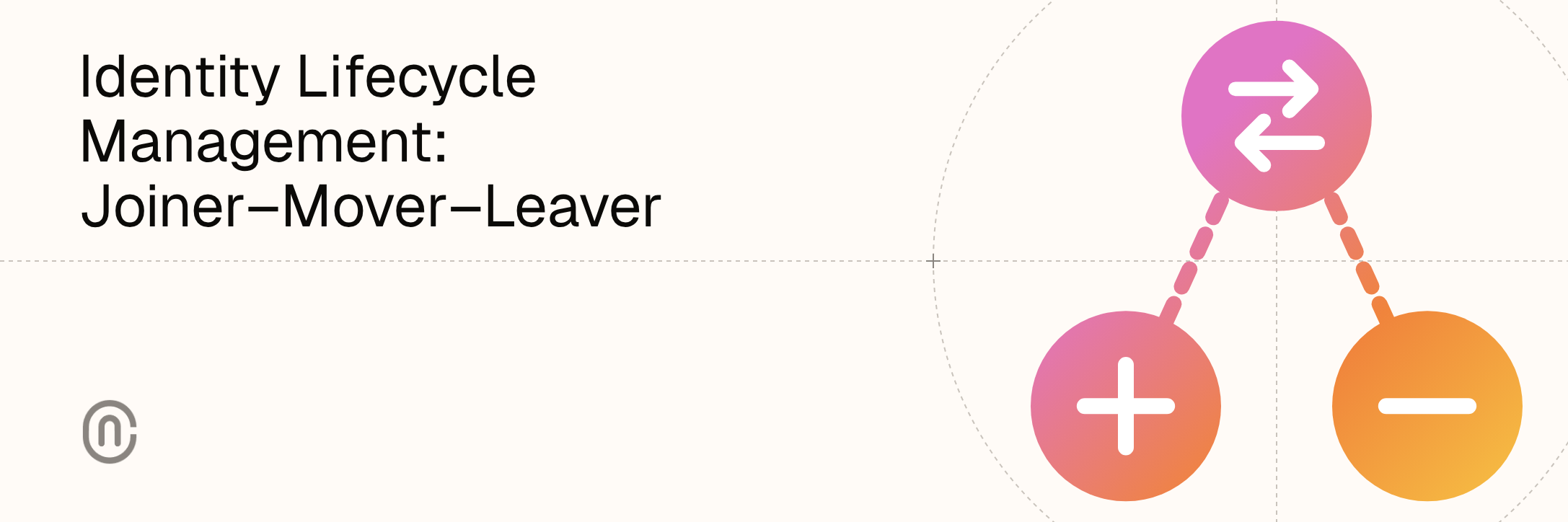 Identity and Access Management
Identity Lifecycle Management: Joiner–Mover–Leaver
The NewCore Team · September 2026